Egg freezing vs. embryo freezing
Both egg freezing and embryo freezing are methods of fertility preservation, but they differ in how the reproductive cells are stored. With embryo freezing, eggs are fertilised with sperm before being frozen, creating embryos that can be transferred to the uterus later.
Embryo freezing has been used for longer, and historically has had higher success rates than freezing unfertilised eggs. However, advances in egg freezing techniques, particularly vitrification, have significantly improved survival and pregnancy outcomes from frozen eggs. Egg freezing also offers greater flexibility for patients who do not wish to fertilise their eggs at the time of preservation for example, if they are not certain that they have met their long-term partner. Where embryos are created and stored for use in later years, consent of both the egg and the sperm producer is required before the embryo is transferred into your uterus. If the partners have split up and the male ex-partner does not give consent, the embryos cannot be used.
The egg freezing journey: step-by-step
Egg freezing is a short fertility preservation cycle that usually takes around two to three weeks, beginning with an initial consultation and ending with egg collection and recovery. During this time, the ovaries are stimulated to produce multiple eggs, which are then carefully retrieved and frozen for future use.
Ovarian stimulation and monitoring
The first stage of treatment involves ovarian stimulation, where fertility medications containing hormones such as follicle-stimulating hormone (FSH) encourage the ovaries to mature several eggs at the same time. This phase usually lasts around 10–14 days.
Throughout this period, your clinic will monitor egg development using transvaginal ultrasound scans and hormone tests. These checks allow fertility specialists to track the growth of ovarian follicles and determine the optimal time for egg collection.
The egg collection procedure
Once the eggs have matured, they are collected during a procedure called transvaginal oocyte retrieval. This is a minimally invasive treatment carried out under sedation to ensure patient comfort.
During the procedure, a specialist uses an ultrasound-guided needle passed through the vaginal wall to gently aspirate the eggs from the ovarian follicles. The process typically takes around 20–40 minutes, after which the eggs are immediately prepared for freezing and storage.
Patients are able to return home the same day and recover quickly, with only mild discomfort in the hours following the procedure.
Vitrification: advanced “flash-freezing”
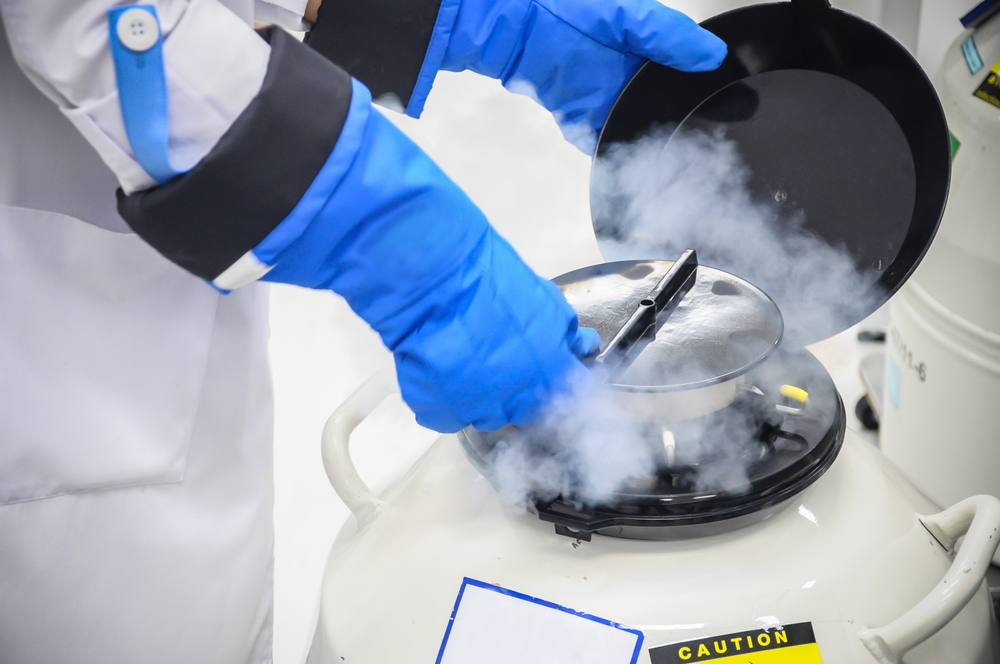
Modern egg freezing uses a technique called vitrification, a rapid freezing method designed to protect delicate egg cells during storage. In this process, eggs are cooled extremely quickly using specialised cryoprotectant solutions, which turn the liquid inside the egg into a glass-like state.
This rapid “flash-freezing” prevents the formation of ice crystals that could otherwise damage the egg’s internal structure. Earlier slow-freezing methods allowed ice crystals to form, which could reduce egg quality after thawing.
Because vitrification freezes the eggs so quickly, it helps preserve their structure and integrity, improving the likelihood that the eggs will survive thawing and remain suitable for use in future fertility treatment, such as IVF.
Under current regulations from the Human Fertilisation and Embryology Authority (HFEA):
● Eggs are initially stored for up to 10 years.
● Storage can be extended in 10-year increments for up to 55 years total, provided the patient renews consent and meets the eligibility criteria.
● Extensions are commonly granted when there is a medical reason for fertility preservation or when the patient confirms they wish to continue storing their eggs.
Success rates by age
The success of egg freezing is strongly influenced by the age at which eggs are collected and frozen. Research shows that younger eggs are more likely to survive thawing, fertilise successfully, and develop into a healthy pregnancy.
Evidence from large studies on oocyte cryopreservation shows that the likelihood of a live birth declines as the age at freezing increases.
Overall, studies show that egg freezing tends to be most effective when performed at younger ages, as egg quality is a key factor influencing future pregnancy outcomes. A fertility consultation can help estimate the number of eggs that may need to be frozen, and the likely success rates based on age and ovarian reserve.
Book a Consultation
Using your eggs: thawing and ICSI
When you are ready to try for pregnancy, your frozen eggs are carefully thawed in the laboratory. Thanks to modern freezing techniques such as vitrification, most eggs survive the thawing process.
Once thawed, the eggs are fertilised using a technique called Intracytoplasmic Sperm Injection (ICSI). During ICSI, a single sperm is injected directly into the egg to help achieve fertilisation. This method is commonly used with frozen eggs because the freezing and thawing process can make the outer layer of the egg harder for sperm to penetrate naturally.
If fertilisation is successful, the resulting embryos can be monitored as they develop in the laboratory, before one is transferred to the uterus during an IVF cycle.
Concept Fertility supports patients throughout this process, helping individuals and couples extend or preserve their fertility options through egg freezing. Babies born from frozen eggs are considered just as healthy as those conceived through fresh eggs, and success rates are high (depending on a range of factors, such as number of eggs removed and age at the time of freezing).
Learn more about whether egg freezing could be a good fit for you.