
Preimplantation Genetic Testing (PGT)
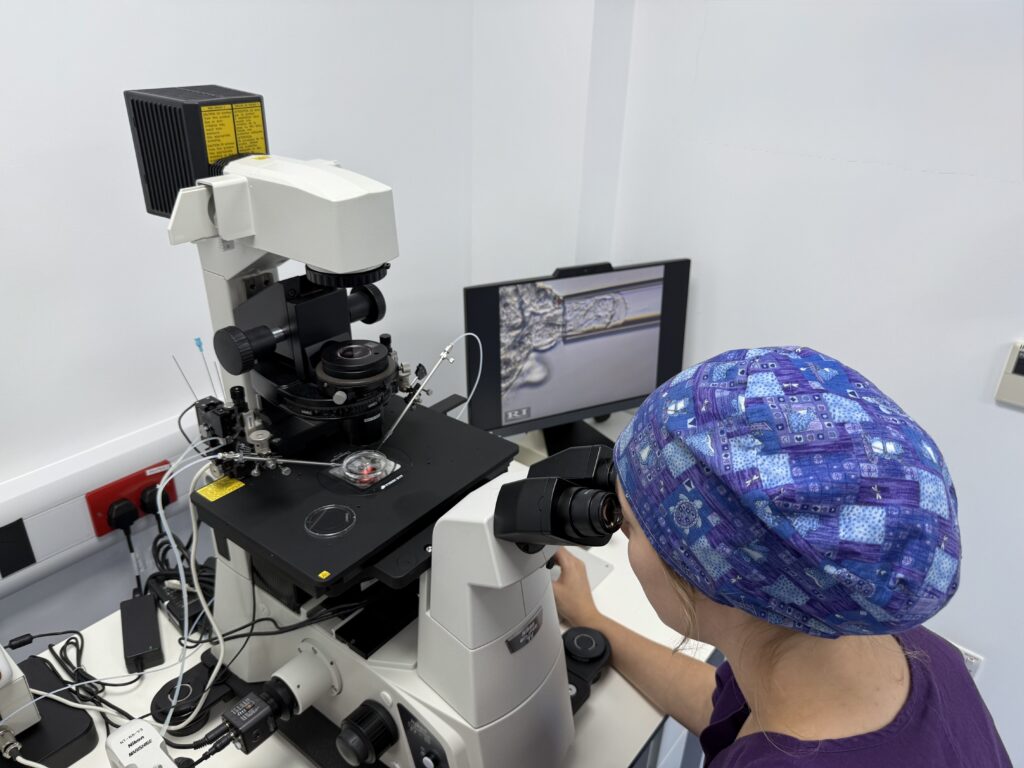
Preimplantation genetic testing (PGT) checks embryos for chromosomal or genetic issues before they’re transferred during an in vitro fertilisation (IVF) cycle.
At Concept Fertility, our embryology experts perform preimplantation genetic testing as part of your IVF treatment, so you can enter the transfer stage informed about each embryo’s genetic suitability.
For women typically over 37 and couples who’ve been through recurrent miscarriages, failed IVF cycles, or who know they carry a heritable condition, that information can make a real difference. With PGT, you’ll have a clearer picture of which embryos have the strongest chance of leading to a successful pregnancy and live birth.
What Is Preimplantation Genetic Testing (PGT)?
During an IVF cycle, embryos are grown in the laboratory to the blastocyst stage (usually around day five). At that point, an embryologist removes a small number of cells from the trophectoderm, the outer layer of the blastocyst that will form the placenta. The lab sends those cells for genetic analysis.
The analysis examines the embryo’s chromosomes. Depending on the type of test, the lab may look for extra or missing chromosomes, structural issues or single-gene disorders passed down through dominant or recessive inheritance.
Once the results come back, your consultant and genetic counsellor will explain what they mean for each embryo. Only embryos that meet the clinical criteria are then considered for a frozen embryo transfer (FET).
Who Should Consider PGT?
PGT isn’t for every patient, but it’s strongly worth considering in some situations. You might be a good candidate if you’ve experienced several miscarriages without a clear cause, you’re female and over 37 and want to maximise your chances per transfer, or if previous IVF cycles haven’t resulted in successful implantation.
It’s also recommended when one or both partners have a known single-gene condition, such as cystic fibrosis, sickle cell disease, or Huntington’s disease, or when prior genetic testing has identified a chromosomal rearrangement that impacts reproductive outcomes.
If you’re not sure whether PGT applies to your situation, a consultation appointment is a good place to start.
| PGT-A | PGT-M | PGT-SR | |
| What it screens for | Extra or missing chromosomes (aneuploidy), such as trisomy 21 (Down syndrome) | Single-gene conditions, such as cystic fibrosis, sickle cell disease, Huntington’s disease | Chromosomal translocations, inversions, or other structural changes |
| Who it’s for | Patients with recurrent miscarriage or repeated implantation failure | Individuals or couples who carry a known genetic mutation | Patients (or their partners) with a suspected or confirmed chromosomal rearrangement |
| Method | Next-generation sequencing (NGS) of biopsied trophectoderm cells | Bespoke probe targeting the specific mutation, followed by NGS | NGS analysis calibrated to detect unbalanced structural changes |
| Approximate results timeline | 2 weeks | 4 weeks (plus probe preparation) | 2 to 4 weeks |
PGT-A (Aneuploidies)
PGT-A screens each embryo’s full set of chromosomes for aneuploidy, meaning any gain or loss of whole chromosomes. An embryo with the correct number of 46 chromosomes (a euploid embryo) is more likely to implant and develop normally.
Aneuploidy is the most common reason an embryo fails to implant or a pregnancy ends in early miscarriage. The risk rises as a woman gets older, because the likelihood of chromosomal errors increases with age. PGT-A gives you and your consultant the information to prioritise embryos with the best chromosomal profile.
PGT-M (Monogenic Disorders)
PGT-M is designed for patients who carry a specific genetic mutation and want to avoid passing it on. Before testing can begin, the laboratory must build a bespoke probe that targets your particular mutation, and this process can take several weeks.
Conditions commonly tested for include cystic fibrosis, sickle cell disease, spinal muscular atrophy, Huntington’s disease, and beta-thalassaemia.
If you already know your carrier status, bring your genetic testing reports to your first consultation so the team can plan the probe preparation alongside your treatment cycle.
PGT-SR (Structural Rearrangements)
Some individuals carry chromosomal rearrangements, such as balanced translocations or inversions, that don’t affect their own health but can cause problems with embryo development. PGT-SR identifies embryos that have inherited an unbalanced form of the rearrangement, which might otherwise lead to implantation failure, miscarriage, or a child born with a chromosomal condition.
If you or your partner have been told you carry a translocation or inversion, PGT-SR can help your team select embryos with a balanced chromosomal structure for transfer.
How the PGT Process Works: From Biopsy to Results
The PGT process fits inside an IVF cycle but will extend it by a considerable amount. Here’s what to expect, step by step.
Your IVF cycle begins as normal with ovarian stimulation, egg collection, and fertilisation. The embryology team then cultures your embryos in the laboratory.
By day five or six, embryos that have reached the blastocyst stage are ready for biopsy. The embryologist removes a small number of cells from the trophectoderm. This outer cell layer does not affect the inner cell mass, which develops into a fetus.
The embryologist then sends the biopsied samples to a specialist genetics laboratory for analysis. The embryos themselves are vitrified (frozen) immediately after biopsy to preserve their quality while the lab processes the results.
Results typically arrive within two to four weeks, though some cases may take longer. Your embryologist will then discuss the findings with you and recommend which embryos are suitable for a frozen embryo transfer.
Test Accuracy, Mosaicism, and Limitations
PGT is a powerful screening tool, but it doesn’t guarantee embryonic health. It’s worth understanding what the results can and can’t tell you.
Accuracy rates for PGT-A using next-generation sequencing are high, but the test analyses only the trophectoderm cells, not the inner cell mass that forms the baby. In a small number of cases, those two cell populations differ. This is called mosaicism, and it means an embryo labelled as abnormal could potentially have a normal inner cell mass, or vice versa.
PGT-M and PGT-SR have their own accuracy profiles, depending on the mutation or rearrangement involved. The laboratory will outline the detection rate and any known limitations during your PGT talk with one of our senior embryologists prior to the testing.
Next Steps: Genetic Counselling and Embryo Transfer
Once your PGT results are ready, the next stage is a consultation to go through the findings together. Your embryologist will explain which embryos are suitable for transfer, what the results mean, and your options.
If you have suitable embryos available, the team can help you plan your frozen embryo transfer (FET) cycle. Our specialists will also walk you through your next steps if mosaic embryos have been found.
Concept Fertility’s embryology laboratory works closely with your clinical team to coordinate timing so the transfer takes place at the optimal point in your cycle.
For patients with more complex results, or who may not have transferable embryos from this round, your consultant will talk through next steps honestly. That might include another IVF cycle with PGT, or exploring other pathways.
Frequently Asked Questions About PGT
Is PGT safe for the embryo?
The biopsy removes cells only from the trophectoderm, which forms the placenta rather than the baby itself. Research and clinical experience to date show that trophectoderm biopsy generally does not harm the embryo’s development or reduce its chance of implanting, but there is always an element of risk with fertility procedures.
How long does it take to get PGT results?
Most results are returned within approximately two to four weeks. PGT-M testing can take longer, typically 4 weeks.
Does PGT guarantee a healthy baby?
No. PGT significantly reduces the risk of transferring an embryo with a specific chromosomal or genetic abnormality, but it doesn’t screen for every possible condition, and PGT cannot guarantee a healthy embryo. Prenatal testing after pregnancy is confirmed is recommended as a follow-up.
Can PGT be used for sex selection?
No. Sex selection for non-medical reasons is not permitted in the UK. PGT can identify the sex of an embryo, but selection on that basis is only allowed when there is a medical need, such as avoiding a sex-linked genetic condition.
What happens to embryos that aren’t suitable for transfer?
Your consultant will discuss all your options with you. Depending on the result, embryos may be stored, used for research (with your consent), or discarded. These decisions are always yours to make, and the team will give you the time and support you need before making a decision.
Do I need genetic counselling before PGT?
We offer a free PGT consultation with one of our embryologists when you sign up for pre-implantation genetic testing, whether it’s PGT-A, PGT-M or PGT-SR. Mandatory counselling is required is you require PGT-M. A genetic counselling session helps you understand what PGT can and can’t do, what results might look like, and how to make informed decisions about your treatment.
Book a Fertility Consultation at Our Clinic
If you’re considering preimplantation genetic testing as part of your fertility treatment, our team at Concept Fertility is here to help.
If you do require PGT we offer a FREE PGT consultation with one of our Embryology specialists as part of that service, to talk you through the whole process and to answer any questions you may have. You can book a consultation with one of our doctors to get started.