
Fertility Treatment Services & Options
What Are Fertility Treatments?
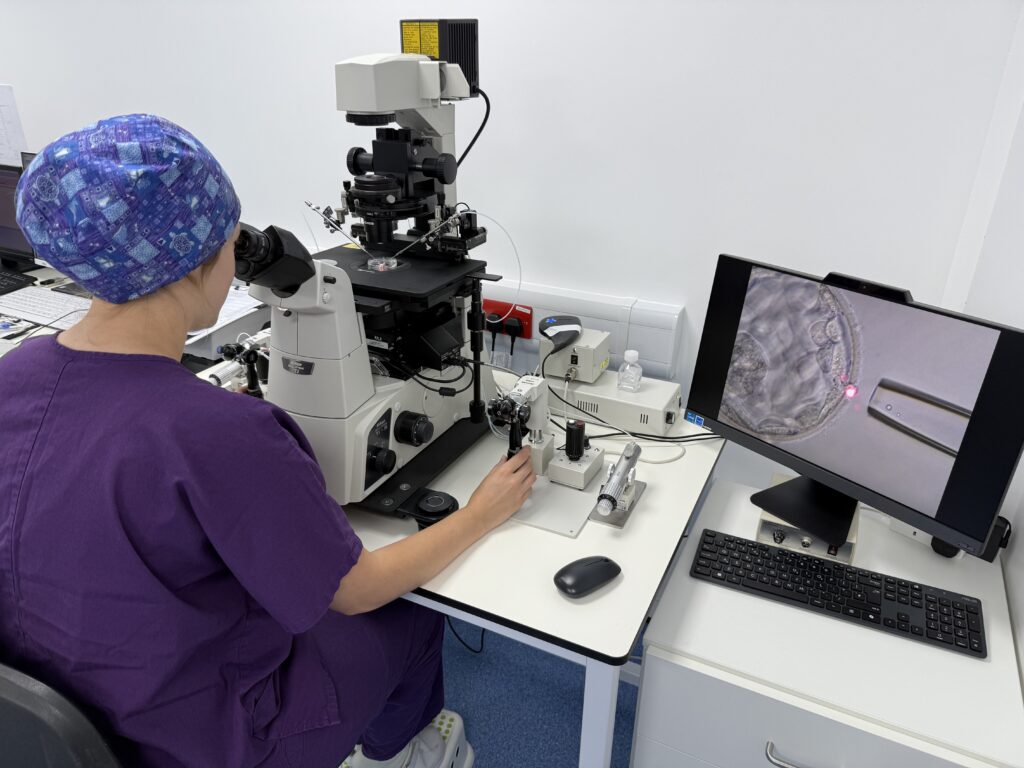
Fertility treatments are medical procedures and interventions designed to help individuals and couples conceive when natural pregnancy is proving difficult. Many modern fertility treatments fall under the umbrella of Assisted Reproductive Technology (ART), a group of evidence-based medical techniques that support fertilisation, embryo development, and pregnancy.
ART can include treatments such as In Vitro Fertilisation (IVF), Intracytoplasmic Sperm Injection (ICSI), donor conception, and fertility preservation. These treatments are tailored to different fertility challenges, including ovulation disorders, male factor infertility, unexplained infertility, endometriosis, and age-related fertility decline.
Just Found Out You Need Treatment? What’s Next
Learning that you may need fertility treatment can feel emotional and uncertain. For many people, it’s a moment that comes with lots of questions about what happens next and what options are available.
The important thing to remember is that fertility difficulties are more common than many people realise. You are not alone, and there are a range of treatments and support options available to help.
The next steps are usually to speak with a fertility specialist, understand the possible causes, and explore treatments that may be suitable for your circumstances. At Concept Fertility, we guide patients through every stage with personalised care and clinically led support, tailored to their unique circumstances.
How Common Are Infertility Issues?
Infertility is more common than many people realise. According to the World Health Organisation (WHO), around 1 in 6 people globally experience infertility during their lifetime, highlighting how widespread fertility difficulties can be across both men and women.
Infertility can be caused by a wide range of factors, including ovulation disorders, endometriosis, age-related fertility decline, low sperm count, or unexplained fertility issues.
Although fertility challenges can feel isolating, statistics show that many individuals and couples are navigating similar experiences and seeking medical support to help them conceive.
Starting Your Journey: Fertility Testing & Diagnosis
Before recommending treatment, fertility specialists will usually begin with diagnostic testing to better understand the possible causes of fertility difficulties. These tests help build a clearer picture of reproductive health and allow specialists to recommend the most appropriate next steps.
Ovarian Reserve (AMH) Testing
Anti-Müllerian Hormone (AMH) testing is commonly used to assess ovarian reserves. The test involves a simple blood sample and can help fertility specialists understand how the ovaries may respond to treatment, such as IVF.
AMH levels naturally decline with age, but results can vary significantly between individuals. While AMH testing does not measure egg quality or guarantee fertility outcomes, it can provide valuable insight when planning fertility treatment.
Semen Analysis
Semen analysis is one of the main diagnostic tests used to assess male fertility. The test evaluates several factors linked to sperm health, including sperm count, motility (movement), and morphology (shape).
Male factor infertility contributes to a significant proportion of fertility cases, which is why semen analysis is often recommended early in the diagnostic process.
Finding the Right Path: Tailored Options for Every Patient
Every fertility journey is different. Factors such as your medical history, future family plans, and fertility diagnosis can all influence which treatments may be most suitable. At Concept Fertility, treatment recommendations are tailored to the individual needs of each patient, helping you explore the options that align with your goals.
Single Women
Many single women choose to explore fertility treatment for a range of personal and medical reasons, whether they are looking to conceive now or preserve fertility for the future. Depending on your circumstances, treatment options may include donor insemination (IUI), IVF using donor sperm, or egg freezing to support future family planning.
Same-Sex Couples
Same-sex couples may require assisted reproductive treatments to help build their family. Treatment pathways can vary depending on the couple’s circumstances and may include donor sperm, donor eggs, IUI, IVF, or surrogacy. Fertility specialists can help guide patients through the legal, medical, and emotional aspects of treatment.
Heterosexual Couples
Heterosexual couples may seek fertility treatment for a variety of reasons, including ovulation disorders, male factor infertility, unexplained infertility, or age-related fertility decline. Recommended treatments may include ovulation induction, IUI, IVF, or ICSI, depending on the underlying fertility diagnosis and treatment goals.
Standard Fertility Treatments: Simple Solutions First
Here at Concept Fertility, we generally advise people to try the simplest treatment first, as not all fertility treatments involve advanced procedures, such as IVF. In many cases, less invasive options may be recommended, particularly for patients experiencing ovulation issues or unexplained infertility.
IUI
IUI is a treatment that places prepared sperm directly into the uterus during ovulation to improve the chances of fertilisation. It may be recommended for unexplained infertility, mild male factor infertility, or patients using donor sperm.
Ovulation Induction
Ovulation induction uses fertility medication to encourage regular egg release, and is commonly recommended for patients with irregular ovulation or conditions such as PCOS. It may support natural conception or be used alongside treatments such as IUI.
Advanced Fertility Treatments and Procedures
Some patients may require more advanced fertility treatments, depending on their diagnosis, medical history, or previous treatment outcomes.
IVF
IVF involves collecting eggs from the ovaries and fertilising them with sperm in a laboratory, before transferring an embryo into the uterus. IVF may be recommended for conditions such as blocked fallopian tubes, endometriosis, unexplained infertility, or age-related fertility decline.
ICSI
ICSI is an advanced form of IVF where a single sperm is injected directly into an egg to assist fertilisation. It is commonly used in cases of male factor infertility, including low sperm count or reduced sperm motility.
Frozen Embryo Transfer
Frozen Embryo Transfer involves thawing and transferring a previously frozen embryo during a later treatment cycle. FET may be recommended following an IVF cycle, and allows patients to use stored embryos without repeating the egg collection process.
Your Journey to Parenthood: What to Expect
Starting fertility treatment can feel like a big step, especially if you are unsure how the process works. While every patient journey is different, most fertility treatment pathways follow a similar structure designed to help specialists understand your needs, recommend suitable treatments, and support you throughout each stage.
The process usually begins with an initial consultation and fertility testing, followed by a personalised treatment plan based on your results and circumstances. Depending on the recommended approach, patients may then move forward with treatments, such as ovulation induction, IUI, or IVF.
Comparing Your Options: IUI vs. IVF
IUI and IVF are two of the most common fertility treatments, but they are designed for different situations and levels of fertility support. The right option will depend on factors such as your diagnosis, age, medical history, and how long you have been trying to conceive.
While IUI is often considered a less invasive first-step treatment, IVF provides a more advanced approach with greater clinical intervention and monitoring. Fertility specialists will usually recommend treatment based on the likelihood of success for your individual circumstances.
The comparison table below highlights some of the key differences between IUI and IVF, including treatment process, invasiveness, success rates, and typical costs, helping you better understand which pathway may be most appropriate for your fertility journey.
| Treatment Factor | IUI (Intrauterine Insemination) | IVF (In Vitro Fertilisation) |
| How It Works | Prepared sperm is placed directly into the uterus during ovulation | Eggs are collected, fertilised in a laboratory, and embryos are transferred into the uterus |
| Level of Treatment | Less invasive | More advanced and clinically intensive |
| Commonly Recommended For | Unexplained infertility, mild male factor infertility, donor sperm treatment | Blocked fallopian tubes, endometriosis, age-related infertility, and unsuccessful IUI cycles |
| Medication Required | Sometimes, depending on the treatment plan | Usually involves hormone stimulation medication |
| Procedure Complexity | Simple outpatient procedure | Multiple stages, including stimulation, egg collection, fertilisation, and embryo transfer |
| Time Commitment | Shorter treatment cycle | Longer treatment cycle with regular monitoring |
| Success Rates | Generally lower per cycle compared to IVF | Typically higher per cycle, depending on age and diagnosis |
| Cost | Lower overall treatment cost | Higher overall treatment cost |
| Use of Embryos | No embryos created | Embryos can be created and frozen for future use |
| Suitable as a First-Step Treatment? | Often recommended as an early treatment option | Usually recommended when other treatments are unsuitable or unsuccessful |
Patient Success Stories at Concept Fertility
Every fertility journey is personal, and no two experiences are exactly the same. Hearing from people who have gone through treatment themselves can provide reassurance, comfort, and a better understanding of what to expect.
At Concept Fertility, we are proud to support patients through every stage of their journey to parenthood. The stories here reflect the experiences of individuals and couples who have trusted our team for expert guidance, compassionate care, and personalised fertility treatment.
Book Your Private Fertility Consultation in London
Starting fertility treatment can feel overwhelming, but an initial consultation can help you better understand your options and the next steps available to you.
Whether you are just beginning your fertility journey or looking for further support, Concept Fertility provides personalised, clinically led care to help guide you forward.